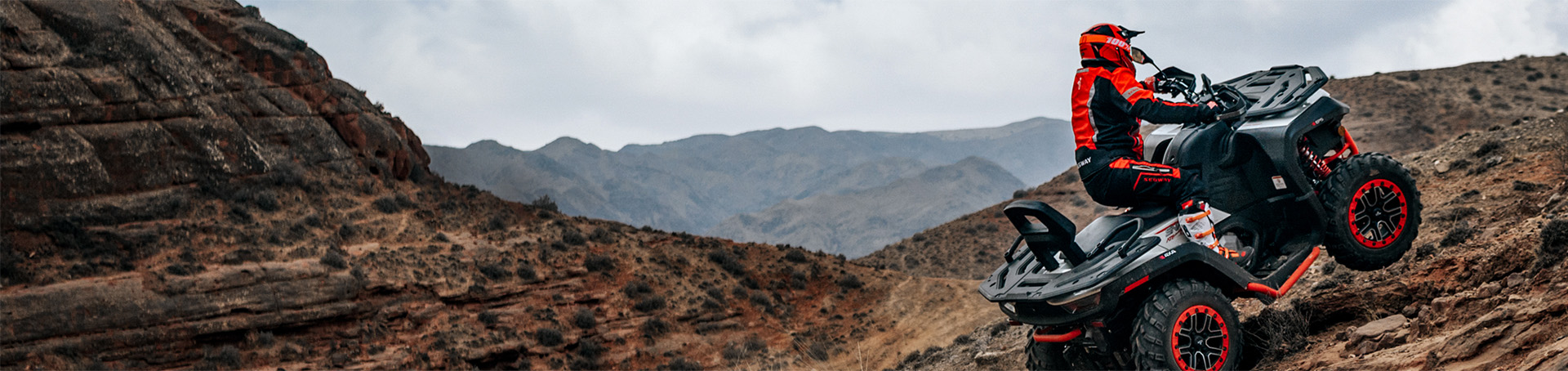
How ATVs Support Agriculture and Rural Work: Real Use Cases
Real ATV agriculture use cases: crop inspection, irrigation checks, livestock herding, produce transport, rural service calls, utility work with buying specs.
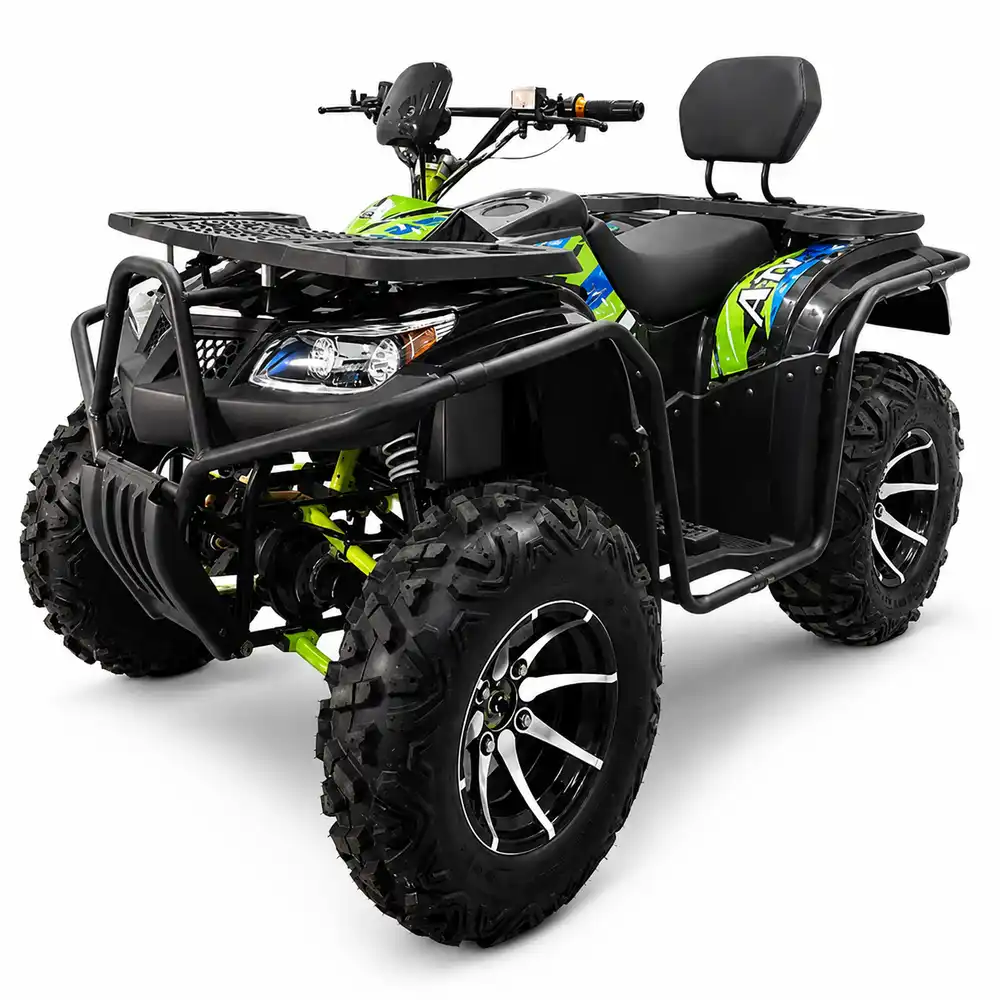
How ATVs Support Agriculture and Rural Work: Real Use Cases
For importers, dealers, and OEM sourcing teams, real ATV agriculture use cases are the difference between a product line that moves and one that gathers dust. An all-terrain vehicle is not a weekend toy that happens to be sold near farmland; in most regions it is the most cost-effective working machine a farm or rural community can own. This guide covers the actual jobs ATVs do on farms and in villages, connects each use case to the specifications buyers should specify, and closes with practical sourcing advice for B2B customers.
Before looking at individual tasks, it helps to understand why the ATV has become a standard agricultural utility vehicle rather than an optional extra. A typical farm operates over scattered parcels: fields, pastures, orchards, storage yards, and access tracks that may be muddy, rocky, or steep. Trucks and tractors are powerful, but they are slow to mobilize and often too wide or too heavy for narrow paths and soft ground. A compact ATV, by contrast, reaches the places large machines cannot, at a fraction of the purchase price and running cost.
From a dealer and importer perspective, this versatility drives repeat demand. One machine can carry out farm ATV applications across every season: scouting in spring, herding in summer, harvest logistics in autumn, and utility chores in winter. When you understand the jobs your customers will do, you can specify the right engine size, drive system, racks, and accessories — and that is where the real sales conversation starts.
Why ATVs Have Become a Core Agricultural Utility Vehicle
Farms have adopted ATVs for reasons that show up in purchase decisions again and again:
- Access. ATVs handle narrow row spacing, orchard lanes, hillsides, and waterlogged tracks where pickups and tractors cannot go.
- Low ground pressure. Wider, low-pressure tires distribute weight, so routine checks do not compact soil or damage young crops.
- Speed of mobilization. A farm worker can be on site in minutes, which matters when irrigation fails or an animal is calving.
- Economy. Purchase price, fuel use, and routine maintenance sit far below truck or tractor levels, which matters to smallholders and cooperatives.
- Multipurpose design. Racks, hitches, winches, and mounting points let one chassis serve dozens of roles across the year.
For B2B buyers, the practical consequence is that the same base model can be configured for several markets. A dealer in a livestock region will order tow hitches and rear racks; an importer supplying orchards will ask for sprayer mounts and wider tires. Studying farm ATV applications before you source lets you stock configurations that match real demand instead of guessing. It also lets you speak your customer's language: when a farmer asks whether a unit can pull a small trailer or carry feed bags, a dealer who can answer from experience closes the sale.
ATV Agriculture Use Cases in the Field
The core ATV agriculture use cases fall into six recurring job families. Each has its own rhythm, terrain, and equipment needs, and each one shapes a slightly different specification sheet.
Crop Inspection and Field Scouting
Crop scouting is the most frequent daily ATV job on arable farms. Agronomists and farm managers ride field margins and headlands to check crop emergence, leaf color, pest pressure, weed escapes, and lodging after storms. On large holdings, a single inspection round can cover several kilometers of uneven ground. Walking is too slow, and taking a pickup onto soft or wet soil causes compaction and crop damage that outweighs the convenience.
For this role, buyers should specify a mid-size utility ATV in the 400–570 cc range with four-wheel drive, generous ground clearance, and front and rear racks. Riders carry sample bags, soil probes, notebooks, and spray flags, so rated rack payload matters as much as engine power. Tire choice is part of the conversation too: multi-purpose tread for dry fields, or low-pressure balloon tires where soil moisture is high.
Irrigation Checks and Water Management
Where crops depend on irrigation, the daily circuit runs from pump to valve to sprinkler line. Workers check pressure, move pipe sections, clear blocked nozzles, and respond when a pump drops or a main line bursts. These routes follow canals, cross wet headlands, and finish on ground that is often muddy by the time the job is done.
Specification priorities here are mud-capable tires, a winch for pulling stuck pipe or the ATV itself out of soft ground, and a front rack built to carry wrenches, fittings, and spare seals. Engine size in the 400–500 cc range is usually enough; what matters more is low-speed control for creeping along lines and a robust skid plate to protect the underside on rough canal banks. For buyers serving orchard, rice, and vineyard regions, ask suppliers about water-crossing limits and whether splash protection for the intake and electrics is standard.
Livestock Herding and Animal Management
On cattle, sheep, and goat operations, the ATV is a working partner rather than a transport convenience. It moves animals between paddocks, checks fence lines and water troughs, delivers mineral blocks and feed bags, and gets a herder to a calving cow or lambing ewe in minutes instead of on foot. In large grazing systems it also carries the supplies that keep a day-long round self-sufficient: tools, fencing staples, salt, and water.
Animals respond to noise, so this is one of the few use cases where a quieter model earns a premium. Buyers should favor engines in the 300–500 cc range with strong low-end torque, low-range gearing for stop-and-go maneuvering, and bright headlights for early-morning and dusk checks. A rear tow hitch for a small trailer or water tank, plus a front rack for salt blocks, completes the setup. In hilly grazing country, four-wheel drive and good brakes are non-negotiable, and buyers should verify the machine can be operated safely one-handed when the rider is also holding a gate or a lead.
Produce Transport and Farm Logistics
Between field and storage, a surprising volume of goods moves short distances: harvest crates, feed bags, seed sacks, fertilizer, tools, fuel cans, and water containers. An ATV with a rear rack and a small trailer covers these runs far more cheaply than a pickup, and it keeps the pickup free for longer road trips. On many smallholdings, the ATV is effectively the farm's only motorized cargo carrier.
For produce transport, specification weight shifts to carrying capacity. Buyers should look at the 500–700 cc segment, verify the rated rack payload, check the rear hitch rating, and confirm what the manufacturer allows when towing a trailer — the combined figure, not just the rack number. A firm rear suspension and a cargo box or flat rack option are worth asking about, because farms rarely carry evenly shaped loads. This is also where the agricultural utility vehicle comparison matters: if most loads are bulky, a UTV with a dump bed may serve the market better; if routes are narrow and budgets are tight, the ATV wins.
Rural Service Calls and Community Support
Outside the farm gate, ATVs carry a great deal of rural ATV work for communities. Veterinarians, mechanics, electricians, and agronomists use them to reach clients on tracks that vans cannot manage. In hilly or flood-prone regions, an ATV is often the only vehicle that gets a technician to a broken pump, a sick animal, or an isolated household the same day. The machine doubles as a mobile toolbox, with tools and parts riding on the racks instead of in a service van.
There is also a growing role as a village transport ATV: carrying small parcels, medical supplies, and tools between villages, or ferrying people over short distances where roads are poor. For buyers serving these markets, road-readiness becomes the priority — lighting, mirrors, and any street-legal configuration the destination market requires. A touring-style seat, a front storage box, and comfortable suspension matter when a machine is ridden daily for kilometers rather than minutes. These are the machines that get reordered, because a community that depends on one will buy another.
Utility and Maintenance Work Around the Farm
The final family is the catch-all of farm chores: fencing, post holes, chain sawing, generator and fuel delivery, spot spraying, snow clearing, and moving tools between buildings. These jobs are short, varied, and frequent, and they are why most farms keep an ATV even when they also own a tractor.
Specifications for this role emphasize attachment compatibility. A front winch for pulling fence posts and freeing stuck vehicles, plow or blade mounts for winter markets, heavy-duty racks, and a dual-range transmission give one machine the flexibility of several. Engine sizes of 500–700 cc handle the load, and liquid cooling is worth specifying for sustained heavy work in hot climates.
Matching the Right ATV Specs to Each Use Case
The table below condenses the six use cases into a sourcing reference. It is deliberately generic: final choices depend on your target market, terrain, and typical loads, but this is the framework most suppliers and dealers work from when they configure a unit.
| Use Case | Typical Work Pattern | Recommended Engine Size | Specs to Prioritize | Sourcing Notes |
|---|---|---|---|---|
| Crop inspection | Frequent, slow, rough terrain | 400–570 cc | Four-wheel drive, ground clearance, rack payload | Confirm rated rack weight and tire options |
| Irrigation checks | Long linear routes in mud and water | 400–500 cc | Mud tires, winch, skid plate | Ask about water-crossing limits and splash protection |
| Livestock herding | Low-speed, stop-and-go, early and late hours | 300–500 cc | Low noise, low-range gearing, good lights | Check sound levels; animals spook easily |
| Produce transport | Short trips, heavy loads, trailers | 500–700 cc | Rear hitch, trailer rating, suspension | Verify combined payload including trailer |
| Rural service calls | Daily road and track mileage | 300–570 cc | Street-legal kit, storage, comfort | Confirm road legality in each destination market |
| Utility and maintenance | Varied loads and attachments | 500–700 cc | Winch, plow mounts, dual-range transmission | Confirm accessory compatibility and lead times |
What B2B Buyers Should Specify When Sourcing Farm ATVs
For importers, dealers, and OEM sourcing teams, the value of this guide comes from turning use cases into a specification sheet. A few practical points separate a good container from a returns problem.
Define the use case before the engine. The same chassis can serve several markets, but accessories, tires, and gearing differ. Start from the dominant job in your region — livestock, irrigation, or transport — and configure around it.
Engine and drivetrain choices matter in the field. Carbureted engines are cheaper and simpler to repair, while fuel-injected models start better in cold weather and run cleaner; most suppliers offer both, so match the technology to your market's service network. Air-cooled engines suit light duty, while liquid-cooled engines suit sustained work in heat.
Ask about build quality where it cannot be seen. Frame welding, fastener quality, sealed bearings, and suspension bushings determine whether a unit lasts three seasons or eight. Request sample units, ride them, and inspect them before committing to large orders. A supplier who hesitates to send a sample or share reference customers is a supplier to verify twice.
Plan for parts and service. Farms repair what they own, so a reliable supply of filters, brake pads, chains, and common spares is as important as the machine itself. Confirm the spare parts list, typical export lead times, and minimum order structure before signing. Ask which parts are highest-wear in agricultural use, and stock those with your first order.
Check compliance and documentation for your destination. Emissions rules, road-legality requirements, and import paperwork differ by country. Ask for certificates, user manuals in the local language, and a packing list that matches customs expectations. If the destination market treats these machines as vehicles rather than agricultural equipment, the street-legal configuration becomes part of the order, not an option.
Time your orders to seasons. Demand for farm machines peaks before planting and harvest in most markets. Typical export lead times run from several weeks to a few months depending on configuration, so place orders early enough to land stock when dealers need it. Dealers who can promise delivery before the busy season will take orders their competitors miss.
Frequently Asked Questions
What is the best ATV engine size for general farm work?
For most farms, a utility ATV in the 400–570 cc range with four-wheel drive is the practical sweet spot. It has enough torque for loaded racks and towing, stays light enough for soft ground, and costs less to run than larger models. Choose 300–500 cc for livestock-focused work where low-speed control matters, and 500–700 cc where transport and heavy utility loads dominate.
Can an ATV replace a pickup truck or UTV on a farm?
Rarely as a full replacement, but very often as the primary working vehicle. An ATV replaces the pickup for most short, on-farm trips at a fraction of the cost. If most of your customers' loads are bulky — feed pallets, harvest bins, large water tanks — a UTV with a dump bed is the stronger option, while an ATV wins where narrow access, low ground pressure, and budget decide the sale.
Which ATV accessories matter most for rural ATV work?
In order of practical value: front and rear racks, a rear tow hitch, a winch, mud-capable tires, a skid plate, and good lighting. Storage boxes, mirrors, and a street-legal kit add value for village transport and service-call markets. Most suppliers can fit these at the factory, which is usually cheaper and more reliable than dealer-installed options.
ATV or UTV: which is the better agricultural utility vehicle for my market?
It depends on the dominant use case. UTVs carry more, seat two or more people, and handle attachment work better, so they suit larger operations and utility contractors. ATVs are cheaper, lighter, narrower, and easier to maintain, which suits smallholders, livestock work, and regions with tight budgets and rough tracks. Many dealers carry both, using the ATV as the volume line and the UTV as the higher-value upgrade.
What should importers check before sourcing farm ATVs for export?
At minimum: sample unit quality, the spare parts catalog, documentation and certificates, road-legality options for the destination, packaging standards, and realistic lead times. Ask the supplier which configurations sell best in markets similar to yours, and request reference photos or videos of the units working. A pre-shipment inspection is standard practice for first orders.
Are electric ATVs viable for agricultural use?
Increasingly, for specific roles. Electric models suit short, frequent routes — irrigation checks, herding circuits, and in-village transport — where quiet operation, low running costs, and simple maintenance outweigh range limits. For long days of heavy transport or towing, petrol models remain the practical default. Most suppliers now offer both, so an electric option is worth adding to the range rather than replacing the petrol line.