ATV vs Side-by-Side: Key Differences and Which to Buy
ATV vs side-by-side: compare seating, ROPS safety, cargo capacity, speed, terrain and price points to choose the right utility vehicle for your dealership.
ATV vs Side-by-Side: Key Differences and Which to Buy
Every month, procurement teams across dozens of export markets ask us the same question: is the ATV vs side by side decision really about the machine, or about the customer? The honest answer is both. A single-rider ATV and a two-seat side-by-side UTV share an engine, four wheels, and a chassis heritage, yet they serve such different buyers that stocking the wrong one can tie up capital for an entire season. This utility vehicle comparison walks through seating, ROPS safety, cargo capacity, speed, terrain, and price points, then maps each machine to the customer segments where it sells fastest. It is written for importers, dealers, and OEM sourcing teams who need practical selection criteria rather than marketing language — the same criteria our own sourcing teams apply when qualifying vehicles for export programs. By the end, you should be able to answer the SxS vs ATV question for your specific market with confidence.
What Is an ATV?
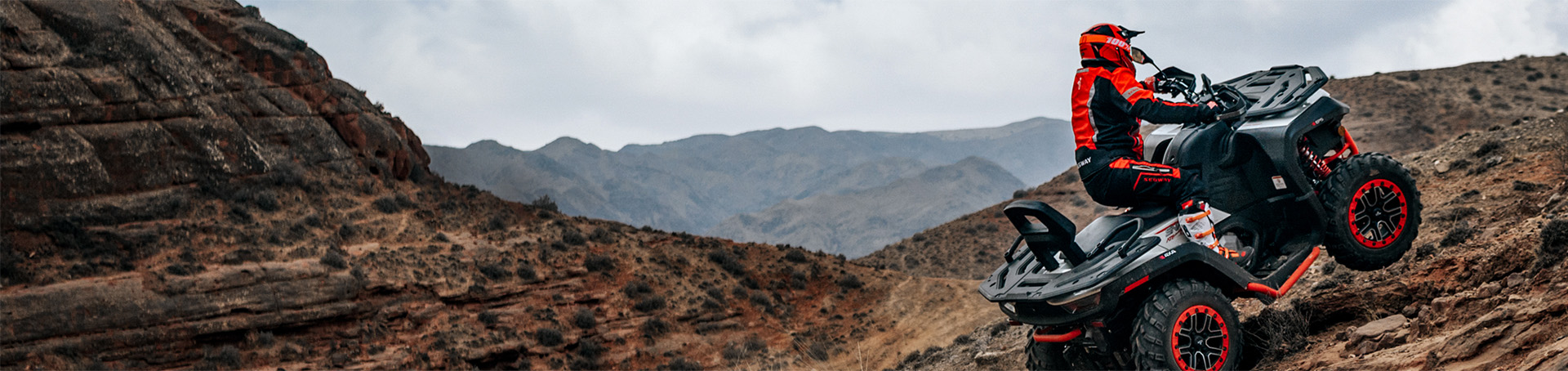
An all-terrain vehicle (ATV) is a straddle-seat, handlebar-steered machine designed around a single operator. Engine displacements commonly range from roughly 250 cc for entry-level utility models to 1,000 cc for high-performance sport machines. The rider sits centered over the chassis, which keeps the vehicle narrow — typically under 50 inches wide — and allows the operator to shift body weight into corners the way a motorcycle rider does. That geometry is the source of the ATV's two defining strengths: agility and access. A competent rider can thread an ATV through tight forest trails, gate openings, and fencelines that would stop a wider vehicle cold. For hunters, trail riders, and small-acreage operators, that capability is the entire value proposition.
What Is a Side-by-Side UTV?
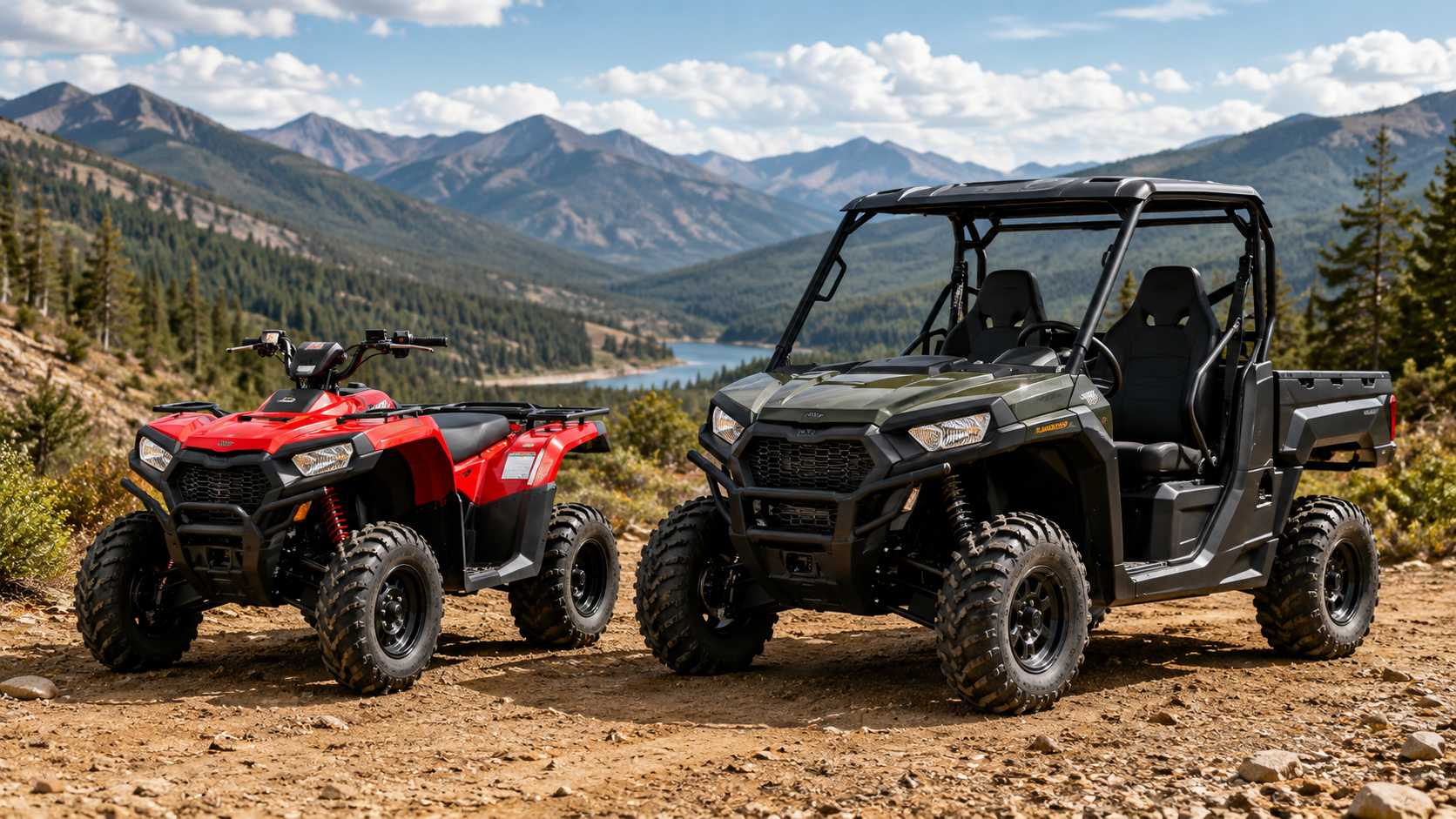
A side-by-side UTV, commonly called an SxS or simply a side by side, abandons the straddle layout entirely. The operator and passenger sit side by side in bucket seats behind a steering wheel, protected by a full roll cage. Most models seat two; four-seat and six-seat variants are widely available for crew transport. Because the chassis is wider and longer than an ATV's, the side by side UTV can carry a tilting cargo bed, heavier suspension, and substantially more payload. It trades the ATV's trail agility for stability, passenger comfort, and utility — which is why the category dominates farm work, ranch management, tourism fleets, and any application where moving people and cargo matters more than squeezing through a gap.
ATV vs Side by Side: Key Differences
The differences between the two categories are best understood as a set of trade-offs rather than a ranking. The sections below compare the machines across the six factors buyers actually weigh: seating, ROPS safety, cargo capacity, speed, terrain, and price points.
Seating and Passenger Capacity
The most visible difference is seating. An ATV is engineered around a single operator; even models with a small rear seat are not designed for sustained two-up travel, and most manufacturers discourage carrying passengers at all. A side by side UTV, by contrast, is built for two from the ground up, with a dedicated passenger position, handholds, and in many models a full second row. For B2B buyers this difference changes the addressable market: an SxS can carry a farm worker, a hunting companion, a tourism guest, or a two-person service crew, while an ATV serves the solo operator almost exclusively. If your customer base includes families, work crews, or tour operators, passenger capacity alone may decide the category.
Safety and ROPS
Rollover protection is the single biggest safety difference between the two types. Side-by-side UTVs are fitted with a ROPS (rollover protective structure) — a welded or bolted roll cage — along with seat belts and, on many export models, doors or nets as options. ATVs carry no roll cage; the operator's body position is the protection system, and rider skill is a genuine factor in safe operation. This is not a theoretical distinction. In markets where buyers, insurers, or tourism regulators scrutinize safety equipment, a factory ROPS can be the difference between a compliant fleet and a blocked order. When you compare ATV vs side by side options for a rental or commercial buyer, treat ROPS and restraint fitment as a checklist item, not a footnote.
Cargo Capacity and Towing
Payload is where the categories diverge most sharply. A typical ATV carries its load on front and rear racks, with payload capacities commonly in the 150 to 300 lb (68 to 136 kg) range depending on model, plus a hitch rated for modest trailers. A side by side UTV replaces racks with a dump bed — capacities commonly run from 500 lb to over 1,000 lb (227 to 454 kg) — and towing ratings are substantially higher. For a farmer moving feed, fertilizer, or tools, the bed is the machine. For a hunter hauling game, ATV racks are usually enough. For a dealer, the cargo spec is one of the fastest ways to match a machine to a customer's stated workload.
Speed and Performance
Sport-oriented ATVs are the fastest machines in either category, with top speeds commonly reaching 60 to 75 mph in high-displacement models. Side-by-side UTVs are tuned differently: most utility-focused models emphasize low-end torque for hauling and climbing, with top speeds in the 40 to 60 mph range, while sport SxS models push higher at a significant price premium. The practical takeaway for buyers is that speed claims should be read against duty cycle. A machine that tops out at 45 mph but pulls a loaded bed up a grade all day is faster at the work that matters than a machine that hits 70 mph on pavement and struggles in a field.
Terrain and Maneuverability
On tight, technical terrain, the ATV remains the reference standard. Its narrow width, light weight, and rider-shift dynamics let it pass where a side by side cannot, and skilled riders exploit that balance on climbs, descents, and side-hills. The side by side UTV trades that precision for stability and comfort on open ground. Its wider track and lower center of gravity make it more forgiving on slopes, washboard roads, and long distances, and passengers ride without the constant physical effort an ATV demands. As a sourcing rule of thumb: dense forest, single-track trails, and gate-constrained properties favor the ATV; open pasture, orchards, construction sites, and maintained paths favor the side by side UTV.
Price Points
Per-unit pricing is where the two categories separate most clearly. An entry-level utility ATV typically carries the lowest cost per vehicle in either lineup, which makes it the natural volume product for price-sensitive markets. A side by side UTV commands a significant premium over a comparable-displacement ATV because the bill of materials is larger — two seats, a roll cage, a dump bed, heavier suspension, and a bigger chassis all add cost. For dealers, the margin math is not simply retail price; it is about parts density, accessory attach rates, and service revenue. SxS buyers tend to purchase more accessories and service their machines more intensively, which can make the category more profitable per unit sold even before the higher ticket price.
Side-by-Side UTV vs ATV: Comparison Table
The table below summarizes the ATV vs side by side differences across the factors covered above. Use it as a quick reference when qualifying a customer's requirements.
| Feature | ATV | Side-by-Side UTV |
|---|---|---|
| Seating | Single rider, straddle seat | Two seats standard; 4–6 seat variants |
| Steering | Handlebars | Steering wheel |
| Rollover protection | None; rider body positioning | Factory ROPS roll cage and seat belts |
| Cargo layout | Front and rear racks | Tilting dump bed |
| Typical payload | 150–300 lb (68–136 kg) | 500–1,000+ lb (227–454+ kg) |
| Typical top speed | Up to 60–75 mph (sport models) | 40–60 mph (utility models) |
| Terrain strength | Tight trails, narrow access | Open ground, slopes, long hauls |
| Relative price | Lower per unit | Significantly higher per unit |
| Primary buyer | Solo riders, hunters, sport users | Farmers, crews, families, fleet operators |
Which to Buy: Recommendations by Use Case
There is no universal winner in the ATV vs side by side comparison — only the right fit for a customer and a market. The recommendations below reflect demand patterns our teams observe most often across export programs.
For Farm and Ranch Operations
Buy the side by side UTV. The dump bed, higher payload, stronger towing, and second seat cover the daily realities of farm work — moving feed, hauling tools, transporting a worker or family member — and the roll cage adds a layer of protection for less experienced operators. Choose an ATV only when the property is dominated by narrow gateways and dense tree lines where the SxS simply cannot go.
For Hunting and Trail Recreation
Match the machine to the terrain. Hunters working tight woods and single-track trails will prefer an ATV's agility and quiet, narrow footprint, and many hunting markets are price-sensitive enough that the lower ATV price point matters. If the customer hunts open country, carries passengers, or wants to haul game and gear in a bed, the side by side UTV is the stronger recommendation.
For Sport and Performance Buyers
Recommend a sport ATV. Buyers in this segment want acceleration, top speed, and handling feel, and the single-rider format is part of the appeal. Note that sport machines command premium pricing in both categories, and sport SxS models typically cost more than sport ATVs of comparable capability, so the ATV usually wins this segment on value.
For Commercial Fleets and Rental Operations
Buy the side by side UTV. Tourism operators, property managers, and service companies need passenger capacity, structural safety equipment, and durability under constant use. A ROPS-equipped SxS is easier to defend in liability reviews and easier to maintain in fleet rotation than a fleet of ATVs, and guests and staff can operate it with minimal training. Specify utility trim with realistic top speeds to keep insurance exposure manageable.
For Export Market Segments
Demand patterns vary by region, but some general signals hold. Markets with strong agricultural sectors and rural labor needs buy heavily in the side by side UTV category. Markets dominated by leisure, hunting, and adventure tourism split between sport ATVs and utility SxS fleets. In every case, verify local registration rules, emission requirements, and labeling expectations with the supplier before ordering — compliance differences between markets are real, and retrofitting after arrival is expensive. Most suppliers will advise on typical export lead times and documentation for your destination, but the final responsibility for homologation rests with the importer.
Sourcing and Dealer Considerations
Whether you call it dealer sourcing, import planning, or fleet procurement, the qualification process deserves the same discipline regardless of category. When our sourcing teams evaluate ATV and side by side UTV programs, they work from the same checklist. Confirm minimum order quantities, and ask whether a mixed container of ATVs and SxS units is practical — many suppliers accept mixed loads, which lets you test demand in both categories with a single shipment. Request typical export lead times in writing and add buffer for port congestion and documentation processing. Verify that manuals, warning labels, and compliance paperwork match your destination market, since requirements differ sharply between regions. Inspect sample units against a written checklist that covers weld quality, wiring harness routing, brake performance, and suspension travel. Finally, negotiate spare parts availability and warranty terms before the first order, not after a problem appears. Dealers who plan for parts coverage from day one consistently report fewer stranded customers and stronger repeat business.
One final piece of advice from years of export work: never let a single customer conversation decide your entire inventory strategy. The most successful dealers we work with treat the ATV vs side by side question as a portfolio decision — stocking both categories, weighting the mix by market signals, and using early mixed shipments to validate demand before committing deep capital to either line.
Frequently Asked Questions
Is a side-by-side safer than an ATV?
A side-by-side UTV generally provides more passive protection than an ATV because it includes a factory ROPS roll cage, seat belts, and a dedicated passenger seat. That does not make it accident-proof: stability still depends on speed, load, and terrain, and the wider chassis cannot be ridden like an ATV. For buyers who prioritize structural safety equipment, the side by side UTV is usually the safer fleet choice.
Can an ATV carry two people?
Most ATVs are designed for a single rider. Some models include a small rear seat, but manufacturers generally discourage carrying passengers, and doing so increases rollover risk and can void warranty coverage. If carrying a passenger is a real requirement for your customers, the correct specification is a side by side UTV.
Which is better for farm work: an ATV or a side by side UTV?
For most farm and ranch workloads, the side by side UTV is the stronger choice because of its dump bed, higher payload and towing capacity, and second seat for a worker or family member. A compact ATV can still be the right machine on properties with very narrow gateways or dense tree lines, and it costs less per unit. Evaluate the dominant task: hauling favors the SxS, access favors the ATV.
Are side-by-side UTVs street legal?
Street legality varies by market and model. Many side-by-side UTVs are sold as off-road vehicles and cannot be registered for public roads without modification, while some jurisdictions allow limited on-road use with additional equipment such as lights and mirrors. Confirm registration rules and homologation requirements for your destination market with the supplier before ordering.
What is the difference between a UTV and a side by side?
In practice, the terms are used interchangeably. UTV stands for utility terrain vehicle, and side by side (or SxS) describes the same configuration: side-by-side seating, a steering wheel, and a roll cage. When comparing side by side UTV options, you are comparing machines within one category — the more meaningful comparison is between that category and single-rider ATVs.
How should a dealer choose between ATVs and side by sides for inventory?
Start with your customer base rather than the machine. If your market is dominated by hunters, trail riders, and price-sensitive solo buyers, lead with ATVs. If your market includes farms, construction crews, tourism operators, or families, the side by side UTV will carry most of the volume. Many successful dealers stock both, using a mixed-container order to test demand before committing deep inventory in either category.