
Can an Electric ATV Handle Quiet Farm Work and Daily Utility Tasks?
Can an electric ATV handle farm work? A practical guide to quiet operation, hauling torque, battery range, farm charging, and limits vs. gasoline ATVs.
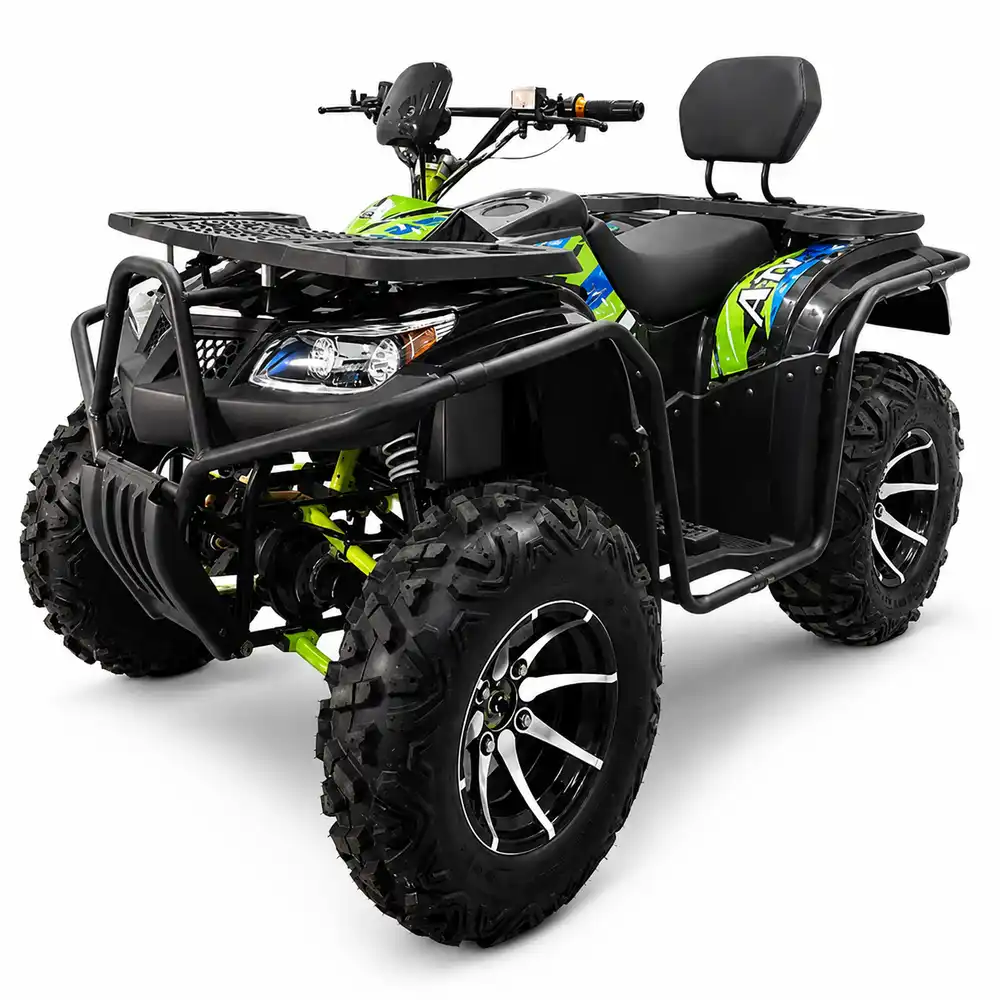
Can an Electric ATV Handle Quiet Farm Work and Daily Utility Tasks?
Walk onto a working farm before sunrise and the loudest thing you will hear is usually the engine of an ATV. Gasoline machines have been the default farm vehicle for decades, but more farm managers, dealers, and sourcing teams are now asking whether an electric ATV can carry the same daily workload. For the majority of routine duties — livestock checks, feed hauling, fence repair, and tool transport — the answer from operators who have switched is a qualified yes. This guide takes a practical look at electric ATV farm work: where quiet operation genuinely pays off, how electric torque handles hauling, what battery range a real workday demands, how farms charge these vehicles, and the honest limits where a gasoline ATV still makes sense.
What “Electric ATV Farm Work” Actually Looks Like on a Daily Basis
Before judging any vehicle, define the job. On a typical mixed farm, an ATV is not a recreational toy; it is a workhorse with a predictable duty cycle. A normal day might include:
- Two or three livestock checks across pastures and pens
- Moving feed bags, hay bales, or mineral blocks
- Carrying fencing tools, posts, and wire between paddocks
- Checking water troughs, gates, and field access points
- Towing a small trailer, sprayer, or utility cart
- Shuttling tools and supplies between sheds and work areas
These are short trips — most under two miles — with frequent stops, partial loads, and long idle periods between tasks. That pattern matters because it is the opposite of the duty cycle an ATV spec sheet is built around. Gasoline machines are designed for long continuous runs; electric utility ATVs are engineered for stop-and-go work with recovery time between trips.
For farms whose daily rounds total ten to twenty miles, an electric machine rarely operates near its limits, which is exactly the operating envelope where it performs best. It also helps to separate farm work from farm territory. An electric ATV is not the right tool for a ranch hand covering sixty miles of pasture in a single afternoon, and any supplier or dealer who implies otherwise is overselling. But for the daily utility tasks that make up most farm operations, electric drivetrains have moved from novelty to a genuine alternative.
The Quiet Advantage: Why Livestock and Early-Morning Rounds Favor Electric
The most underrated feature of an electric utility ATV on a farm is not the drivetrain — it is the silence. Gasoline engines emit a constant low-frequency drone that travels well across open ground. Electric motors at low speed produce little more than tire noise and the whir of the motor, which changes how animals, neighbors, and workers experience the same task.
Calmer Livestock and Lower-Stress Stock Checks
Operators who run electric machines around livestock report calmer behavior during checks, particularly with cattle, horses, and sheep. Loud, abrupt engine noise can spook animals at close range, and spooked animals are harder to count, harder to move, and more dangerous to the rider. A quiet vehicle lets you approach slowly, observe body condition and lameness without startling the group, and carry out herd checks that are faster and safer because the animals do not react first.
The effect is most visible when animals are already nervous: calving and lambing seasons, first-time mothers, and recently moved groups. In these conditions, a quiet approach is not a comfort feature — it is a practical tool for reducing stress that can affect feeding behavior and, in dairy settings, milk production.
Early-Morning and Late-Evening Operation Without Disturbance
Farm work does not follow office hours. Most operators run their quietest tasks at dawn or dusk, and those are exactly the hours when a gasoline engine is most disruptive. An electric ATV lets a farmer move through the yard and lanes before neighbors wake, on leased hunting ground, or near property lines without starting a conversation about noise.
There is also a regulatory angle. More municipalities are tightening noise bylaws for agricultural vehicles operating near residential zones, and some game farms and hunting leases restrict internal combustion vehicles outright. A quiet farm ATV sidesteps those restrictions entirely and is increasingly a selling point dealers can use with customers who run noise-sensitive operations.
No Exhaust Fumes Around Feed, Stock, and Enclosed Spaces
Gasoline exhaust near stored feed, in barn alleys, or around young stock is more than unpleasant — it is a contamination and health concern. Electric machines produce zero tailpipe emissions, which makes them safe to idle inside sheds, greenhouses, and covered handling areas where an engine would normally be shut down or ventilated for. For operations that store grain, hay, or silage, removing a combustion source from the daily routine reduces fire and spoilage risk as a side benefit.
Torque and Hauling: What an Electric Utility ATV Can Actually Pull
One of the most persistent myths about electric vehicles is that they feel weak. In practice, electric motors deliver peak torque from a standstill, which is precisely the kind of force farm work demands. Climbing out of a muddy gateway, pulling a loaded trailer from a stop, or inching forward with a full sprayer are low-speed, high-torque tasks — the exact band where electric drivetrains are strongest.
Typical utility-class electric ATVs in the current market carry payload ratings in the 300–500 lb range and tow ratings around 1,000–1,500 lb, comparable to entry and mid-level gasoline utility machines. Most suppliers equip them with cargo racks, hitch receivers, and winch mounts as standard or low-cost options, so the practical fit for hauling feed bags, fencing rolls, water tanks, and small trailers is already built in.
Two torque-related behaviors are worth knowing. First, electric machines hold low speed smoothly, which makes them easier to control when towing near capacity or working on slopes. Second, regenerative braking — where the motor helps slow the vehicle and recovers charge — is genuinely useful on hilly farms, because the terrain that drains a battery on the way down gives some of that energy back.
Battery Range for Daily Farm Tasks: Planning the Workday
Range is the question every B2B buyer asks first, and it deserves an honest answer. Most utility-class electric ATVs currently claim 40–60 miles of mixed-use range per charge. Real farm range depends on terrain, load, speed, and temperature, and a cautious planner assumes 25–35% less than the brochure figure in hilly or cold conditions.
For most farms, the math still works for daily farm tasks. A daily round of livestock checks, feed runs, and maintenance trips typically totals 10–20 miles. Even at a conservative real-world range of 30 miles, that leaves a full day of margin with overnight charging. The risk case is the extended day: a busy harvest season, a drought year with long water runs, or a large property where one round trip is already twenty miles.
Dealers should coach buyers through this planning exercise rather than quoting brochure numbers: list the longest realistic day, add 50% margin, and choose a battery capacity that clears it. Where capacity is tight, the practical answer is not a bigger battery — it is a spare battery pack or a second charger, both of which most suppliers offer for swappable-pack models. Charging speed matters too: many current models reach 80% in two to four hours from a standard outlet, which fits a lunch break or a between-round top-up.
Charging Infrastructure on Farms: Power You Already Have
Farms are better positioned for electric vehicle charging than most people assume. Nearly every farm has standard 120V and 240V outlets in barns, workshops, and outbuildings, and an electric ATV recharges from exactly those outlets. Overnight charging aligns with the natural rhythm of farm work: the vehicle is parked at the end of the day, plugged in, and ready by first light with no trip to a fuel station.
For operations that want to reduce grid draw, solar charging is a growing option. A modest panel array feeding a dedicated outlet can cover a single farm electric vehicle's daily consumption in most regions, and some suppliers sell integrated solar-compatible chargers. Where grid power is unavailable at a remote work area, a portable generator or a second battery pack carried in a truck can cover the gap.
Two practical cautions apply. Cold weather slows charging — most lithium packs charge more slowly below freezing, and some battery management systems will not charge at all until the pack warms. Operators in cold regions should charge in a sheltered or heated space or use models with thermal management. And farms running several electric vehicles should map outlet locations early, because a single charger becomes a bottleneck the day two machines need a top-up.
Electric ATV vs. Gasoline ATV for Farm Duty: Honest Comparison
| Factor | Electric Utility ATV | Gasoline Utility ATV |
|---|---|---|
| Noise at working speed | Near-silent; ideal near livestock and neighbors | Constant engine drone |
| Emissions and fumes | Zero tailpipe; safe in sheds and barns | Exhaust and fuel fumes |
| Low-speed torque | Peak torque from standstill; smooth crawling | Good, but peak torque builds with engine speed |
| Daily range | 40–60 mi claimed; plan for 25–35% less | Limited mainly by fuel carried |
| Refuel vs. recharge | 2–4 hours to 80% from a standard outlet | Minutes at any fuel station |
| Running cost per mile | Low; electricity is cheaper than gasoline | Higher; fuel prices vary seasonally |
| Maintenance | No oil, filters, or carburetor; fewer moving parts | Regular oil, air filter, and tune-up work |
| Cold-weather operation | Range and charge speed drop in deep cold | Reliable, though cold starts need choke |
| Upfront cost | Higher purchase price typical | Lower purchase price typical |
| Best fit | Daily utility rounds, livestock farms, noise-sensitive sites | Long patrols, heavy sustained work, remote areas |
Where Electric ATVs Fall Short: Honest Limits
No honest evaluation hides the weak points. The clearest limit is sustained heavy duty: hours of continuous plowing, snow removal, or loaded climbing will drain a battery far faster than stop-and-go rounds, and a gasoline machine simply keeps going as long as there is fuel. Remote operations with no reliable power are likewise a poor fit, because a dead battery in a back paddock is a logistics problem, not a quick fuel-can fix.
Deep cold is the second limit. Lithium packs lose usable capacity in freezing temperatures, so a farm in a harsh winter climate that expects dependable performance in every January blizzard should weigh range loss carefully — or keep a gasoline unit as backup. Finally, there is the fleet and parts question: electric models are newer, so dealers and importers must verify spare battery availability, motor controller lead times, and after-sales support before committing, especially when sourcing from overseas suppliers where a warranty claim involves shipping.
Sourcing Considerations for Importers, Dealers, and OEM Teams
For buyers sourcing electric ATVs for resale or fleet use, the evaluation does not end at the machine. Battery shipping is regulated: lithium packs move under specific dangerous-goods rules, which affects freight cost and typical export lead times — usually four to eight weeks for sea freight, longer for air. Confirm that the supplier's documentation matches your market's compliance expectations, and ask for battery certification paperwork up front rather than after the order is placed.
Parts strategy deserves the same attention as the vehicle itself. Ask suppliers for spare battery pack availability, charger lead times, and warranty terms in writing, and consider stocking a spare pack or two for every ten units sold, because battery is the component customers will need first. Dealers should also request cold-climate configuration options — heated battery management, low-temperature charging settings — if their territory sees freezing winters. Most established suppliers offer these as line items, but few volunteer them in a first quote.
Finally, price total cost of ownership, not the sticker. Electricity per mile is a fraction of gasoline per mile, and the maintenance ledger — no oil changes, no air filters, no carburetor service — shrinks the lifetime cost gap with gasoline machines considerably. Present that math to farm customers and the quiet operation sells itself.
Frequently Asked Questions
How long does an electric ATV battery last on a typical farm workday?
For most farms, a single charge covers the day. Typical daily rounds of livestock checks, feed hauling, and maintenance trips total 10–20 miles, while utility-class electric ATVs claim 40–60 miles per charge — with real-world range 25–35% lower in hilly or cold conditions. Farms with long distances should size the battery with 50% margin or carry a spare pack.
Can an electric ATV pull a trailer, sprayer, or loaded cart?
Yes, within its rated capacity. Most utility-class electric ATVs tow roughly 1,000–1,500 lb and carry 300–500 lb on the racks, with hitch receivers and winch mounts available from most suppliers. The electric motor's peak torque from standstill is particularly strong for starting a loaded trailer from a stop or crawling up a slope.
Do electric ATVs perform well in cold weather?
They operate in the cold, but with caveats. Lithium batteries deliver less usable range in freezing temperatures — plan for a 20–35% reduction — and many packs charge slowly or not at all below freezing until warmed. Farms in harsh winter regions should charge indoors, choose models with thermal management, or keep a gasoline unit as backup.
How much does it cost to run an electric ATV versus a gasoline ATV?
Electricity costs a fraction of gasoline per mile, and maintenance is much lighter — no oil changes, air filters, or carburetor service, and fewer moving parts overall. The trade-off is a higher purchase price. Over a multi-year ownership period, most operators find total cost of ownership comparable or favorable to gasoline, especially at high daily usage.
Can I charge a farm electric ATV with solar or a generator?
Yes. Farms can charge from standard 120V/240V outlets already installed in barns and workshops, and a modest solar array can cover one machine's daily consumption in most regions. Portable generators work for remote areas, though generator charging is less efficient than grid power. Check the charger's input requirements against your generator's output before relying on it.
Are electric ATVs durable enough for daily farm use?
Yes, for the duty cycles described here. Electric drivetrains have fewer moving parts than combustion engines — no oil system, clutch, or exhaust — which removes several common farm breakdown points. As with any farm vehicle, durability depends on chassis quality and supplier build standard, which is why sourcing teams should verify spare parts availability and warranty support before buying.