
Go Kart Export Packing: How Buggies Are Shipped Safely Worldwide
Go kart export packing protects engines, frames and tires in transit: crating, disassembly, moisture barriers, container loading plans, freight and insurance.
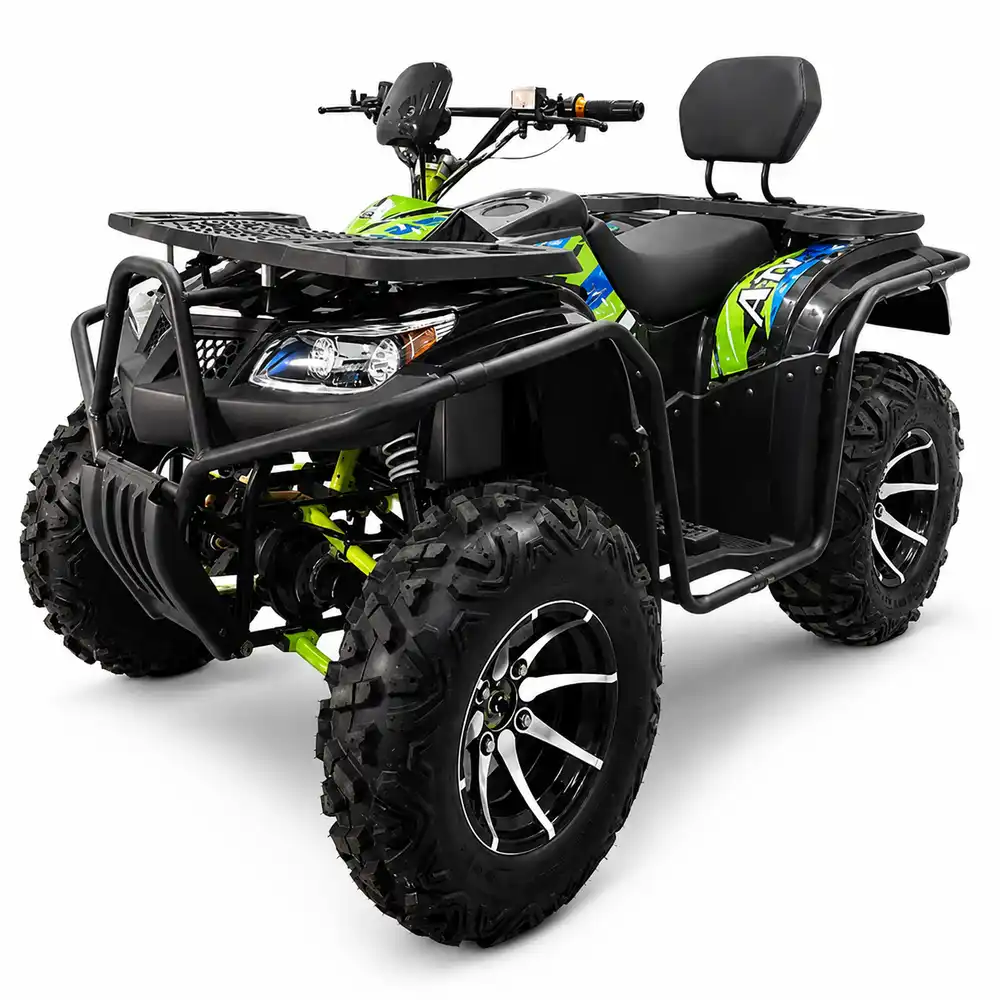
Go Kart Export Packing: How Buggies Are Shipped Safely Worldwide
Go kart export packing is the difference between a container of showroom-ready machines and a container of bent roll cages, scratched bodywork, and seized engines. A go kart that leaves the factory floor in perfect condition still faces forklift handling, port stacking, humidity swings, and up to six weeks of ocean transit before it reaches your warehouse. This guide covers the complete export process: how professional crates are built, what gets disassembled, how machines are secured and protected from moisture, how containers are loaded, and how to choose between LCL and FCL go kart freight options.
Why Go Kart Export Packing Decides the Condition of Your First Container
Most suppliers who ship go karts domestically are used to pallet wrap and a layer of cardboard. Export is a different discipline. A typical overseas shipment spends 25 to 45 days in transit, passes through at least two ports, and is handled by equipment that treats every box the same. A 250 kg two-seat buggy that breaks loose inside its crate becomes a battering ram capable of punching through plywood and damaging every unit around it.
Importers who receive a damaged first container usually trace the problem to one of four failures: under-specification crates, inadequate internal blocking, missing moisture protection, or an unreasonable container loading plan. All four are preventable. Buyers who specify export-grade buggy export packaging in their purchase agreement, and verify it before dispatch, routinely see damage claims drop to near zero.
What Gets Disassembled Before Packing, and What Stays Assembled
There is no single disassembly standard, and any supplier claiming one universal process should be asked exactly what it covers. In practice, most suppliers use partial disassembly, balancing crate volume against assembly time at destination.
Steering and Front Axle
The steering wheel is almost always removed, because it is the widest point of the machine and wastes crate width. Most suppliers also remove the front wheels, or at least one pair, allowing the kart to sit lower and reducing crate height. Removed wheels are strapped to the crate wall or stacked in void space.
Roll Cage, Mirrors, and Body Panels
Loose accessories — mirrors, flag poles, windshields, and detachable body panels — are removed, wrapped in foam or corrugated board, and packed in a dedicated accessory box inside the crate. Roll cages that are bolted rather than welded typically ship assembled, because disassembly and re-torquing at destination creates its own risk of misalignment.
Battery, Fluids, and Electrical System
Batteries are disconnected, removed, or at minimum isolated with capped terminals. This is not just a packing preference: many carriers and customs authorities restrict lithium and wet-cell batteries in certain configurations, so battery policy should be confirmed at the quotation stage. Fuel tanks are drained and purged; for petrol models, most suppliers run the engine briefly after draining to clear the carburetor and lines. Coolant is usually left in place in temperate climates but drained when the route crosses freezing conditions.
Crate Construction: The Core of Go Kart Export Packing
The crate is the single most important element of go kart export packing. A machine can be disassembled and protected perfectly, but if the crate fails, everything inside is at risk.
Timber Specification and ISPM 15 Compliance
Export crates are built from kiln-dried or heat-treated softwood that meets ISPM 15, the international standard requiring heat treatment to a core temperature of 56°C for 30 minutes and a visible IPPC stamp on the timber. Crates without the mark are refused at many borders or destroyed at the importer's expense. Plywood outer skins are generally exempt because manufactured board counts as processed, but any solid timber framing and blocking must carry the IPPC mark. Buyers should request a copy of the heat-treatment certificate with the packing list.
Frame Design and Fastening
A well-built crate starts with a pallet base of solid timber joists, typically 90 mm by 90 mm or equivalent, giving forklift entry on two or four sides. Corner posts and vertical studs are fixed with ring-shank nails or coated screws, not staples — staples are the most common cause of crate collapse under stacking loads. Panels are screwed to the frame so the crate can be opened at destination without prying damage. Crate packing specifications worth asking for include timber thickness, floor joist spacing, and the maximum stacking load the design is rated for.
Sizing for the Machine
Every crate should allow roughly 50 to 100 mm of clearance between the machine's widest point and the crate wall. Tight packing transfers every impact directly to the kart; excessive void space lets the machine shift. A typical two-seat buggy ships in a single-unit crate of roughly 2.6 to 3.0 m long, 1.2 to 1.4 m wide, and 1.1 to 1.4 m high — dimensions that vary widely with model, which is why per-model crate drawings are the professional norm.
Securing Methods: Blocking, Bracing, and Tie-Downs
Once the kart sits inside its crate, it must be immobilized in all six directions — forward, backward, left, right, up, and down. Professional suppliers combine methods rather than relying on any one.
Ratchet straps are the backbone. Most suppliers use at least four polyester straps, typically 50 mm wide, anchored to the crate floor and passed over frame rails or A-arms, with protective webbing or foam under every contact point. Straps are tensioned until the machine cannot be moved by hand, then re-checked after the crate is moved once, because initial settling always loosens them.
Wooden blocking completes the job. Wheel chocks cut from solid timber are nailed to the floor around the tires, corner blocks brace the frame at its lowest points, and stands are blocked at the base. Foam or corrugated board protects painted surfaces from strap and timber contact. The goal is a machine that stays immobile even if the crate is tipped onto its side during a rough port handling event.
One practical verification: ask your supplier for photographs of the interior of each sealed crate, taken after final tensioning. A quick visual check tells you more about securing quality than any packing list description.
Moisture Protection: Humidity, Condensation, and Corrosion
Ocean transit is a humidity challenge. A container that leaves port at 20°C can sit in a yard at 35°C, then drop toward freezing on a high-latitude route. That temperature swing drives condensation inside an unvented space, and go karts — full of fasteners, bearings, chains, and unpainted steel — are exactly the cargo that corrodes first.
Professional buggy export packaging includes at least three layers of defense. First, a vapor barrier: machines are wrapped in VCI (vapor corrosion inhibitor) film, or critical components such as chains, brake discs, and bearing surfaces are treated with VCI paper or a compatible rust-preventive oil. Second, desiccant: most suppliers place 1 to 3 kg of silica gel or clay desiccant per crate, distributed in perforated bags that must not contact painted surfaces. Third, breathable protection: the machine is covered with a breathable dust-and-water barrier sheet rather than airtight plastic, which traps condensation against the kart.
One caution for buyers: a fully airtight wrap sounds protective but often does more harm than good, because temperature-driven condensation has nowhere to go. The professional standard is a breathable cover plus targeted VCI and desiccant, not a sealed plastic cocoon.
Container Loading Plans: LCL vs FCL for Go Karts
Container selection is where go kart shipping economics and packing strategy meet. A crate that fits the container perfectly is worthless if the loading plan leaves 40% of the space empty — or worse, if the crate cannot fit at all.
Most suppliers quote go kart freight on one of two bases: FCL (full container load), where you pay for the whole container, or LCL (less than container load), where your crates share space with other cargo and you pay per cubic meter. The choice is usually driven by order size and consolidation needs.
| Factor | FCL (20 ft / 40 ft HC) | LCL (shared container) |
|---|---|---|
| Typical fit | 2-4 karts in 20 ft; 4-6 in 40 ft HC, depending on model size | 1 to 5 crates consolidated with other cargo |
| Cost profile | Flat rate; lowest cost per unit when the container is filled | Per cubic meter; efficient for small orders |
| Handling risk | Your crates loaded once at origin, then sealed | Multiple moves and re-handling at consolidation depots |
| Lead time | Direct routing with more sailing options | Adds consolidation and de-consolidation days |
| Best for | Dealer orders of 4+ units and fragile high-value models | Samples, trial orders, small dealer restocks |
Whatever the mode, the loading plan matters. Crates should be loaded with their long axis aligned to the container length, blocked against the end walls and each other with airbags or timber dunnage, and lashed to the floor lashing points. Never leave a single crate loose at the container door — it is the first thing hit when the doors open. Ask your supplier for a loading plan drawing or a photograph of the sealed container; reputable suppliers treat this as standard documentation.
Go Kart Freight Options and Transit Considerations
Beyond LCL and FCL, three other go kart freight paths are common. Break-bulk or roll-on/roll-off (RoRo) shipping suits very large machines — full-size UTVs and farm machinery — that cannot be crated economically; the unit is driven onto the vessel and secured. Air freight is occasionally used for a single sample unit, where speed justifies the cost; a crated go kart weighing 250 to 350 kg is air-freightable but expensive, so it is reserved for pre-production samples and urgent dealer units. Rail and trucking carry crates inland after discharge, and the crating standard must survive that leg too.
Typical export lead times for sea freight run 20 to 45 days door-to-door depending on route, with production and export packing adding 1 to 2 weeks on top. Buyers planning a season launch should add buffer for port congestion, which has become a recurring feature of global shipping.
Insurance, Documentation, and Pre-Dispatch Inspection
Go kart export packing is only half the protection story; paperwork and insurance are the other half. Before dispatch, the supplier should provide a packing list (unit serial numbers, crate weights and dimensions, ISPM 15 certificate), a commercial invoice, and a bill of lading. The packing list is the document your customs broker and your insurance claim will both depend on, so insist on serial numbers that match your purchase order.
For insurance, most importers insure cargo on an all-risk basis rather than named perils, because the gap between the two is exactly where go kart claims fall: handling damage, theft from a shared depot, and condensation damage are common unnamed causes. The premium is a small percentage of cargo value, dwarfed by a single rejected container. Claims start with evidence: photographs of each crate at origin, at discharge, and before opening if you suspect damage. A carrier's liability is typically capped far below cargo value, so shipping insurance is not optional for high-value machinery.
Finally, agree the inspection protocol in the purchase contract: whether the supplier photographs each crate interior, whether a third-party surveyor witnesses packing, and whether your agent may inspect before the container seals.
Go Kart Shipping Checklist: Verify Before the Container Seals
Use this go kart shipping checklist when reviewing any supplier's export process — ideally before you sign, and again before dispatch:
- Crate timber is ISPM 15 heat-treated and stamped, with the certificate attached to the packing list.
- Pallet base gives four-way forklift entry and is rated for stacking at least two crates high.
- Steering wheel, mirrors, and loose panels removed; wheels removed or blocked so the kart is fully stable.
- Battery policy confirmed and compliant with carrier rules; fuel drained and lines purged.
- At least four ratchet straps over frame points, all protected with foam or webbing.
- Wooden chocks nailed around every wheel or stand base; no movement by hand.
- VCI protection on chains, discs, and bearings; desiccant placed away from painted surfaces.
- Breathable dust and water cover over the machine; no fully airtight plastic cocoon.
- Crate dimensions and weights confirmed against the container loading plan.
- Interior photos of each sealed crate and a photo of the sealed container before departure.
- Packing list with serial numbers, ISPM 15 certificate, invoice, and bill of lading received before the vessel sails.
- All-risk cargo insurance in force, with the declared value matching the invoice.
FAQ: Go Kart Export Packing Questions from Importers
Do go karts need to be fully disassembled for export?
No. Most suppliers use partial disassembly: steering wheels, mirrors, loose panels, and sometimes the front wheels are removed, while the frame, engine, and roll cage ship assembled. Full disassembly is rare and only justified when a model is packed flat-pack by design. Ask for the supplier's standard disassembly list before ordering, and confirm what re-assembly work you will need to do at your end.
How many go karts fit in a shipping container?
As a generic guide, a 20-foot container typically fits 2 to 4 karts and a 40-foot high-cube fits 4 to 6, but the real number depends on crate dimensions — a large two-seat buggy uses roughly twice the volume of a compact single-seat kart. The professional approach is to request a container loading plan based on actual crate sizes before committing to a container.
What determines go kart freight cost?
Go kart freight cost is driven by chargeable volume in cubic meters, weight, route, season, and whether you ship LCL or FCL. LCL is quoted per cubic meter and includes consolidation fees; FCL is a flat rate per container. Fuel surcharges and port charges vary month to month, so ask for a quote that separates base freight from surcharges.
Are wooden crates subject to customs rules?
Yes. Solid timber in export crates must comply with ISPM 15 — heat-treated and stamped with the IPPC mark — or it can be rejected or destroyed at destination. Plywood and other manufactured boards are generally exempt, but framing and blocking are not. Confirm the supplier's ISPM 15 certificate is included with the packing list.
What should I do if a kart arrives damaged?
Photograph the crate before opening, note any damage on the delivery receipt, and open it with a witness or camera rolling. Keep all packing materials until the claim is resolved. Notify your insurance provider and the carrier immediately, and file the claim with the evidence package: purchase order, packing list, bill of lading, and photos from origin, discharge, and opening.
How long does export packing add to production lead time?
Most suppliers complete export packing in 1 to 2 weeks after the machines are built, depending on order size. Combined with typical export lead times of 20 to 45 days door-to-door for sea freight, plan total delivery time as production plus packing plus transit — and add buffer for port congestion.