
How to Compare UTV Brands: A Dealer Scorecard That Works
A practical UTV brand comparison scorecard for dealers and importers: score product range, build quality, warranty coverage, spare parts and lead times.
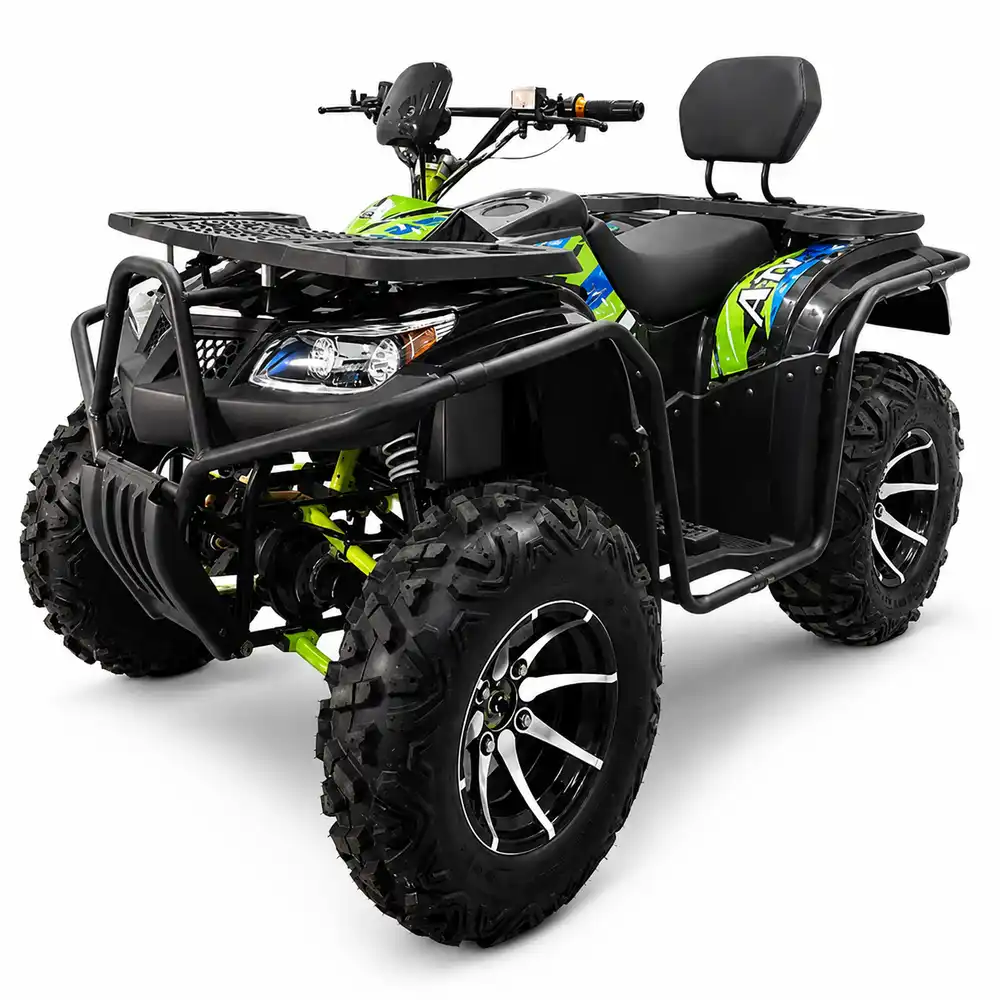
How to Compare UTV Brands: A Dealer Scorecard That Works
Every UTV brand comparison starts with glossy catalogs and ends with a real business decision: which supplier deserves your inventory budget, your floor space and your reputation. For dealers, importers and OEM sourcing teams, choosing a UTV partner is rarely about picking the single best machine. It is about finding a supplier whose product range, production discipline and after-sales commitments fit the way you actually sell. The problem is that most comparisons are made on gut feel — a striking design, an aggressive quote, a confident sales rep. This guide replaces guesswork with a repeatable UTV dealer scorecard built on nine measurable criteria, complete with a scoring template you can adapt to your own market.
Why a Structured UTV Brand Comparison Beats a Gut Decision
A structured UTV brand comparison matters because informal evaluation biases you toward what is visible: price per unit, horsepower, cargo capacity. The factors that quietly decide whether your dealership thrives — build consistency across batches, spare-part coverage three years from now, warranty claim handling speed — rarely appear on a spec sheet. A disciplined brand evaluation forces you to collect the same evidence for every candidate and to weight each criterion deliberately. It also protects you against anchoring: look at a premium brand first and a mid-range supplier looks cheap; look at the cheapest quote first and everything else looks overpriced. A scorecard keeps candidates on equal footing and leaves a written record you can revisit when supplier performance changes.
The Nine Criteria in a Practical UTV Dealer Scorecard
Every market is different, but nine criteria cover the decision factors that matter to almost every B2B buyer. Score each candidate from 1 (poor) to 5 (excellent), then apply the weights in the template below. If a criterion does not apply to your market, drop it and redistribute its weight.
1. Product Range and Lineup Depth
A supplier's lineup tells you how seriously it treats the UTV category. Look for coverage of the segments your customers actually buy: utility models for farms and job sites, sport models, and electric or hybrid variants if your market is moving that way. Check model-year freshness and whether the supplier offers real configuration options such as engine size, cab and cargo packages. A deep product range means fewer second suppliers for you and more upgrade paths for customers. Be wary of a "range" that is really one platform wearing different stickers — verify that different models genuinely differ in frame, suspension and drivetrain.
2. Build Quality and Component Sourcing
Ask which components are made in-house and which are purchased, and from whom. A supplier that openly names its engine, tire, shock and brake sources is usually more confident about quality than one that treats sourcing as confidential. Look for process discipline: weld quality on frames, fastener grades, wiring harness routing and consistency of finish. Where possible, inspect two units from different production batches and compare them side by side. Batch-to-batch variation is one of the most common hidden risks when you compare UTV suppliers, because a perfect sample tells you little about the other nine hundred units in your container.
3. Certifications and Compliance Documentation
Certification requirements vary by destination market, so confirm what documentation a supplier can actually issue for the countries you sell into: emissions, safety and vehicle type approvals, as relevant to your region. Do not accept verbal claims. Ask for certificate numbers, issuing bodies and the exact models each certificate covers, and check that documentation is kept current as regulations change. A supplier that treats compliance as a paperwork burden is a long-term liability: one non-compliant shipment can stop your containers at customs and erode customer trust. Treat certifications as a pass/fail gate in your scorecard, not a nice-to-have.
4. Price Competitiveness
Compare landed cost, not list price: ex-works price plus freight, insurance, duties, port handling and destination taxes. Ask whether quotes include accessories, spare-part starter kits, manuals and warranty registration, or whether those are billed separately. When you compare UTV suppliers, request tiered quotes at several order sizes and check whether the discount curve is honest or simply front-loaded. Also clarify the supplier's price adjustment policy — how often prices change and how much notice you receive — because unexpected increases are a classic margin killer for dealers. A competitive quote is only competitive if it survives the full cost chain.
5. Lead Times and Logistics
Typical export lead times depend on production schedules and destination, so ask for figures per order size: samples, a container and a full production run. Clarify whether the clock starts at order confirmation, at payment or at production completion, and get a written commitment with buffer time built in. Ask how the supplier handles delays: early communication, partial shipments or silence. Then evaluate logistics competence — packing quality for ocean freight, marking and fumigation compliance, and willingness to coordinate with your freight forwarder. Lead-time reliability decides how many units you can sell each season, not just what you pay per unit.
6. Spare Parts Availability
For a dealer, a UTV is only as good as the parts pipeline behind it. Ask which parts are stocked, whether high-wear items such as belts, brakes, filters and clutches ship from stock or are made to order, and what typical dispatch times look like. Confirm minimum order quantities and whether mixed kits are allowed. A compact catalog of fast-moving parts is often more practical than a huge catalog where most lines are back-ordered. Ask how long the supplier commits to supporting each model after production ends — most serious suppliers commit for several years — and get that commitment in writing.
7. Warranty and After-Sales Terms
Warranty is where marketing promises meet reality. Compare duration, covered components and labor-versus-parts terms, then examine the claim process: who approves claims, how long approval takes, and whether dealers hold replacement stock or wait for each shipment. Ask about the claim rejection rate and the most common rejection reasons. Check how warranty works across borders, because some suppliers only cover their domestic market and leave export dealers exposed. For an importer, the best warranty is one with a documented, fast claims flow and regional parts support — not simply the longest headline duration.
8. Marketing Support
Marketing support determines how much of your own budget you must spend to sell a supplier's machines: catalogs, spec sheets in your language, photography, point-of-sale materials, showroom displays, video and co-op advertising programs. Ask whether a dealer portal offers downloadable assets and current pricing, and whether launch materials arrive in time for new models. Some suppliers also provide demo-unit discounts and training for your sales and service staff. Weak support quietly raises your customer acquisition cost, so score it even though it feels softer than engineering criteria. Marketing support is a margin issue wearing a sales hat.
9. Reliability Track Record
Ask for reference dealers in markets similar to yours and actually contact them. Ask about early failure rates, the most common defects and how the supplier responded when problems surfaced. Check how long the supplier has exported UTVs and whether it shares quality data such as inspection pass rates. Track record also means stability: a supplier that keeps platforms and management consistent is easier to plan around than one that rebrands every year. Combine dealer references with your own batch inspections, and remember that a reliability track record is built in the field, not in the brochure.
The UTV Supplier Scoring Template
The template below is a practical starting point. Adjust the weights to your market, but keep the total at 100%. Score each candidate from 1 to 5 on every criterion, multiply by the weight and add the results. A candidate below your pass threshold — or failing a pass/fail gate such as certifications — should not make your shortlist, no matter how strong the overall score looks.
| Criterion | What to Evaluate | Weight | Score (1–5) | Weighted Score |
|---|---|---|---|---|
| Product range | Segment coverage, model-year freshness, real configuration options | 10% | ||
| Build quality | Component sourcing, weld and finish quality, batch consistency | 15% | ||
| Certifications | Documentation for your destination markets, pass/fail gate | 10% | ||
| Price competitiveness | Landed cost, volume tiers, price adjustment policy | 15% | ||
| Lead times | Quoted versus achieved lead times, delay handling, packing | 10% | ||
| Spare parts | Stock depth, dispatch times, model support commitment | 10% | ||
| Warranty | Coverage terms, claims speed, cross-border support | 10% | ||
| Marketing support | Dealer portal, localized assets, co-op programs, training | 5% | ||
| Reliability track record | Dealer references, defect history, supplier stability | 15% | ||
| Total | Add weighted scores | 100% |
Two practical notes on the UTV supplier scoring process. First, score every criterion for every candidate before you look at totals, and ideally have two people score independently, then reconcile differences in a meeting. Second, apply the same weights to every candidate within one evaluation round; change weights between rounds only when your market strategy changes, not to make a preferred supplier win.
How to Run the Scorecard in Practice
Running the scorecard takes most of a week of preparation and a few hours of meetings, and it pays for itself the first time it stops you from choosing the wrong supplier. Follow this sequence:
- Gather evidence before scoring: spec sheets, certificates, quotes, lead-time commitments, parts lists, warranty terms and reference contacts from each candidate.
- Score independently on the 1–5 scale, using only documented evidence. If a fact cannot be verified, score it low and flag it for follow-up.
- Set a pass threshold in advance — for example, a 3.5 weighted average — and apply pass/fail gates such as certifications before any score matters.
- Visit or video-audit at least the finalists: a factory tour, a batch inspection or a sample-unit teardown reveals more than any brochure.
- Re-run the scorecard at least annually for existing suppliers, because lead times, parts availability and warranty behavior change as a supplier grows.
Common Mistakes When Comparing UTV Suppliers
Even with a scorecard, buyers make predictable errors. Avoid these when you compare UTV suppliers:
- Comparing list prices instead of landed cost, then discovering that duties and freight change the ranking.
- Trusting a single sample unit instead of inspecting multiple units across production batches.
- Skipping reference calls because the sales rep was persuasive and the quote was sharp.
- Weighting price so heavily that the supplier cannot fund the parts pipeline or warranty service you need.
- Ignoring the parts and service pipeline until the first breakdown, when it is too late to renegotiate.
- Accepting verbal certification claims without certificate numbers, issuing bodies and model coverage.
A scorecard is only as good as the evidence behind it. The goal is not to find a perfect supplier — few exist — but to find the supplier whose strengths match your market's priorities and whose weaknesses you can manage. Rank candidates honestly, keep the documentation, and revisit the comparison every season. Done well, the UTV dealer scorecard turns a high-stakes bet into a decision you can defend.
UTV Brand Comparison FAQ
Answers to the questions dealers and importers ask most often when they evaluate UTV suppliers.
How many UTV brands should I compare before choosing a supplier?
Shortlist three to five candidates for a formal evaluation round. Fewer than three gives you no reference point for pricing and quality; more than five spreads your evidence-gathering too thin. Add or replace candidates as your market data changes.
What is the most important factor in a UTV dealer scorecard?
There is no universal winner — the right weighting depends on your market. If you sell into rural areas with weak service networks, spare parts and warranty will dominate. If you compete mainly on price, landed cost and lead times carry more weight. The discipline of weighting deliberately matters more than any single factor.
How can I verify a supplier's quality claims without visiting the factory?
Contact reference dealers, request a sample unit from a current production batch rather than a showroom model, and ask for inspection reports or third-party testing documentation. A video audit of the production line and warehouse is a reasonable request during negotiation, and most serious suppliers accommodate it.
Should I prioritize price or after-sales support when comparing UTV suppliers?
Price buys the first container; after-sales support buys the second, third and every later order. A slightly more expensive supplier with fast parts dispatch and a working claims process usually delivers a lower total cost over three years than a cheap supplier that leaves you holding warranty costs.
How often should I re-score existing suppliers?
At least annually, and whenever a supplier changes ownership, moves production or shifts its parts policy. Supplier performance drifts, and a scorecard used only for new candidates tells you nothing about the suppliers already in your inventory.
Do cheaper UTV brands always mean lower dealer margins?
Not automatically. A cheaper unit can earn healthy margins if warranty costs stay low, parts move fast and customers return for accessories and service. The risk is not the price point — it is an unverified reliability track record that turns cheap inventory into expensive after-sales work.